

Developing Refusal Skills at rehabilitation centres Cape Town
When you begin your journey towards recovery when attending Rehabilitation centres Cape Town, one of the first things you will learn is to find out why you are drawn to a substance and how you can change this with drug refusal skills. What you will also learn is which situations you are drawn to use the most and which emotions are linked to using. Identifying these factors, or triggers, can help you learn specific ways to deal with the cravings that may surface, and make a plan on how to respond to each trigger.
Alcohol is the dominant substance of abuse in the Eastern Cape and the Central Region (Free State, North West and Northern Cape) while Cannabis is the most common substance of abuse in Gauteng and KwaZulu Natal. Substance abuse exists in every walk of life regardless of gender, sexual orientation, race, ethnicity, employment, or economic status. Going to work does not disqualify someone from being addicted to a substance. In fact, many addicts hold down jobs.
Studies in South Africa have shown that approximately 1 in 3 substance abuse relapses result from not knowing how to say ‘no’ to peer pressure (for more information, click here) When you begin your journey to recovery at rehabilitation centres Cape Town, you will begin to notice that the more you practice saying ‘no’, the easier it gets.
Like everything, practice makes perfect when developing refusal skills.
At rehabilitation centres Cape town, we call this Refusal skills. These are known as methods and strategies for saying ‘no’ and can help to avoid situations a person doesn’t want to be a part of, or prevent a recovering addict from relapsing. Needless to say, these are pretty powerful skills to develop.
It is important that you know that there are two types of social pressure and both will be important when you commit to your recovery. these are namely:
• Direct social pressure is when someone openly asks if you’d like to participate in an activity.
• Indirect social pressure is when you are surrounded by other people doing the activity, without anyone directly inviting you to join them.

It’s best to be prepared for either scenario! 😊
Throughout your engagement in rehabilitation centres Cape Town, you will learn successful responses to include in your practicing of drug refusal training. It is a fact that once you leave rehabilitation centres Cape Town, you will have to face scenarios of temptation.
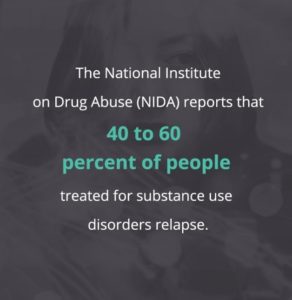
It is therefore imperative that you have a plan in place, thereby increasing your confidence to be able to handle a pressured situation, which increases the likelihood of staying committed to sobriety. At rehabilitation centres Cape Town, we believe that practice and assertiveness are critical components of learning the skills of saying no.
When it comes to learning refusal skills, many people feel uncomfortable or guilty about saying no and think they need to make excuses for not wanting to use. Due to feeling guilt, or even wanting to please people, you might open the possibility of saying yes to future offers of drugs or alcohol.
At rehabilitation centres Cape Town, you will learn that you don’t have to apologize, rationalize, or make excuses. You can say “NO”. Saying ‘No’ can be followed by, “I don’t use anymore, and I don’t want you to ask me again.”
Let’s look at some examples…
Friend: “Hey Bob, want to do a rock?”
Scenario 1 Bob: “Mm . . . I don’t think so . . . I’m trying to quit. “
OR
Friend: “Hey Bob, want to do a rock?”
Scenario 2 Bob: “NO. I don’t use anymore. Please don’t ask again. I have to go now.”
Which one do you think has worked best? Let’s have a look at scenario 2. Here, Bob did the following:
Responded rapidly — no hemming and hawing.
Responded with a clear and firm “no” that does not leave the door open for future offers. Avoid saying things like “not today,” or “I’m not using right now”.
Make sure your body language communicates the same message. Stand/sit up straight, make eye contact, don’t smile apologetically, keep your voice level and serious — say it like you mean it.
Walk away. It may be tempting to stay and explain that you are in treatment. They may congratulate you and start saying they want to get clean too. Leave anyway.

Let’s begin to think about all the people you used to use drugs or alcohol with over the past while. you could try to limit your contact with these people and thereby manage your cravings but the Odds are that you will probably run into them every now and again. Some of these people may ask you to begin using with them again and when they do, you might feel…
You’re probably going to be very tempted to say yes
A big part of you may want to say yes
A split second of weakness or indecision – or an unconvincing refusal – can open the door to relapse
BUT this is completely normal feelings to have and is part of your journey to recovery!

Let’s think of addiction treatment as buying yourself a toolbox that is filled with the tools you’ll need to overcome brain changes that addiction has caused. At rehabilitation centres Cape Town, one of these tools – is learning to refuse drugs or alcohol when they’re offered.
Learning Drug Refusal Skills at rehabilitation centres Cape Town:
OK, so you are determined to stop your drug and alcohol use
You now have the knowledge that you are definitely going to run into people from your past who you may have used with, or friends that continue to use. In some cases, you may even be offered to drink or use drugs or even feel pressured or have a strong craving to use.
You should also realize that in such situations, you’ll probably also experience strong cravings to use and that a momentary lapse in resolve will result in relapse
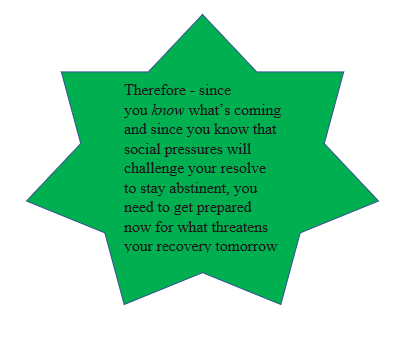
“How to Say No Like You Mean It” – an aspect you will learn at rehabilitation centres Cape Town:
At rehabilitation centres Cape Town, you will learn to firmly turn down drugs or alcohol in a way that closes the door to further discussion about the subject. Now, let’s get to some practical steps you can take to improve your drug refusal skills…
Learning How to Refuse Drugs and Alcohol at Rehabilitation Centres Cape Town:
• Say no politely but use a strong and assertive tone of voice.
• While saying no, maintain good eye contact and an upright body posture. You want to make sure the person understands that you are serious and that you mean what you say. Your body language communicates even more than your words in this situation.
• Say no in a way that discourages future offers. Do not make an excuse for your refusal. If you say you can’t drink right now because you have to get up early, then you’ve done nothing to dissuade that person from offering you alcohol again the next time she sees you. You are much better off saying something like, “I do not smoke weed anymore so I’d appreciate it if you would not offer it to me again in the future.” or “for health reasons I have given up drinking for good.”
• After you say no, suggest another type of activity instead of drug or alcohol use (“I don’t do coke anymore, but there’s a movie I want to see playing – do you want to go catch it?”)
• Or, after you say no, change the subject of the conversation to anything other than using drugs or alcohol.
• If the person continues to try to convince you to do drugs or to drink, you need to get out of the situation or make it clear to them that you are not OK with continual offers.
For example, “I like hanging out with you but if you are not going to respect that I don’t drink anymore I won’t be able to hang out with you anymore and I’ll have to ask you to leave my house.”
Now that you have the tools to practice saying no. Here is an exercise for you to start to think about ways in which you can further improve your skills.
Practice Exercise:
1. Think of some people you’ve used or drank with in the past. Imagine a situation where you might run into one of these people in the future and where you might get offered drugs or alcohol.
2. Write down the names of a number of people you’ve used or drank with in the past and beside each name write out a few words to describe a situation where you might be asked to use or drink again.
3. And then for each situation, think of how you’d refuse the offer of drugs or drink and what exactly you’d say in response.
For example:
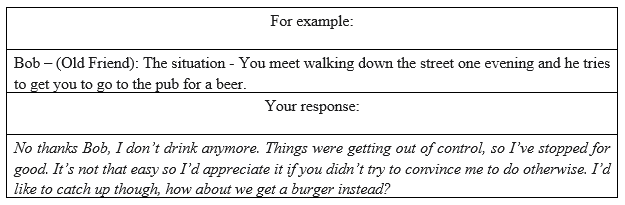
Once you’ve written down a bunch of scenarios and your responses to these risky situations, see if you can get a friend to sit down with to role-play so you can practice your drug refusal skills. Click here for more practice on drug refusal skills

“The National Institute on Drug Abuse (NIDA) has reported that the most effective drug prevention education is that of practicing drug refusal skills. Research also shows that we can achieve some credible success through role playing.”
Monti et al., 1989, gives us some tips on how we can use Non-verbal measures for refusing drugs and alcohol.
1. Making good eye contact is important: look directly at the person when you answer in order to increase the effectiveness of the message.
2. Stand or sit up straight to create a confident air.
3. Don’t feel guilty about refusing. It won’t hurt anyone if you choose not to use.
4. You feel uncomfortable or guilty about saying no and think they need to make excuses for not using, which leaves open the chance of future requests.
5. “No” can be followed by changing the subject, suggesting alternative activities, and clearly requesting that the individual not offer drugs again in the future. ¬ Go away if the other person keeps insisting or pushing.
“Addiction is like a curse and until it is broken, its victim will perpetually remain in the shackles of bondage.“ – Oche Otorkpa